
Good SoilUnited Methodist Church
“To know, to grow, and to sow.”
Harrow Creek, Texas

Good Soil United Methodist Church
Harrow Creek, Texas
Sundays
- 9:30 amSunday School
- 10:45 amWorship
Wednesdays
- 6:00 pmSupper, then Bible study
September – May
123 Main Street
Anywhere, XX 99999
Find your way
Tap a picture, or a tab on the edge of the page.
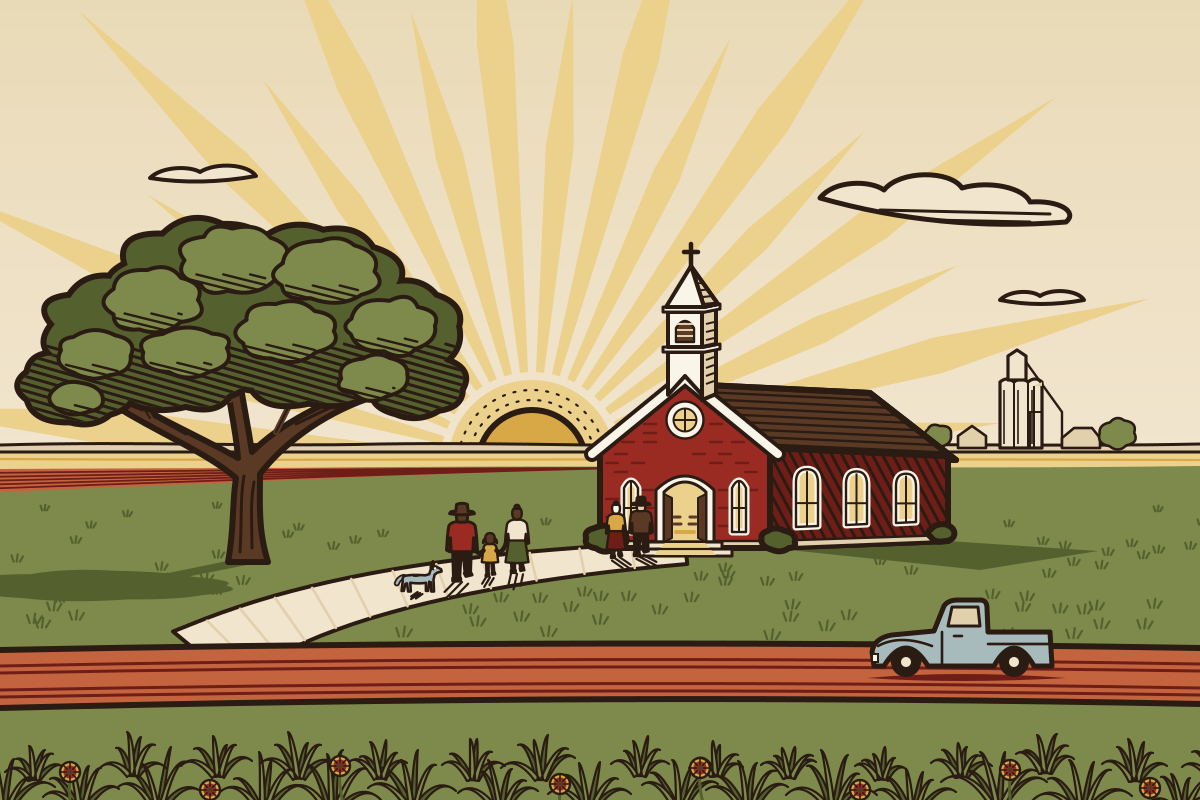
To Know
Get to Know Us
To Know
Your First Sunday
Walking into a new church can feel like walking into somebody else’s family reunion. Here is what you need to know.
Where to park
Good Soil is at 123 Main Street. Park in the lot behind the fellowship hall on Pecan Street. The side door there is level with the sidewalk, with no steps, so it is the easy way in for wheelchairs, walkers and strollers.
When
- 9:30 am — Sunday School for all ages
- 10:45 am — Worship in the sanctuary, about an hour
What worship is like
Traditional: hymns from the United Methodist Hymnal, organ and piano, and the Chancel Choir. The bulletin tells you what comes next. Nobody will ask you to stand up and introduce yourself, though somebody will probably say hello.
What to wear
Anything. You will see Sunday dresses and pressed shirts, jeans and boots, and the occasional Plowboys sweatshirt.
Children
The nursery cares for infants through age 3 during both hours. Older children are welcome in worship; pick up an activity bag by the door. We do not mind a little noise.
Communion
On the first Sunday of each month we share Holy Communion. The table is open to everyone, member or not. Whether you take it is up to you, and nobody will think twice either way.
Coffee
Yes. The Seekers class at 9:30 runs on it, and they will gladly share.
Questions before you come? Call (254) 555-0316 or email office@goodsoilumc.org. The office is open Tuesday through Thursday, 9 am to 1 pm. Every other way to reach us is on the Contact page. Or just come. There is room.
To Know
Our Story
In 1908, eleven farm families started a church in the back office of the cotton gin. They called it Harrow Creek Methodist Episcopal Church, South — a long name for a small room that smelled of lint and machine oil. By 1911 they had built a white frame church of their own.
The name got shorter in 1939, when the northern and southern Methodist churches reunited and the “Episcopal” and the “South” came off the sign. The building got sturdier in 1952, when the red-brick sanctuary that still stands was finished.
The dry years
That sanctuary was finished in the middle of the Texas drought of record, the one every drought since has been measured against. From 1950 to 1957 the rain mostly didn’t come. Fields blew away in red clouds. Families loaded up and left, and Sunday attendance fell by half.
The church held on. The people who stayed started eating supper together on Wednesday nights, “because nobody should eat alone when the crop fails.” Nobody has found a good reason to stop. Wednesday Night Supper still runs September through May.
How we got our name
In 1968, The Methodist Church and the Evangelical United Brethren joined to form The United Methodist Church. Since the sign was being repainted anyway, the congregation decided to choose a new name.
At the meeting, an old farmer named Wendell Pruitt stood up and read Mark 4:8, about the seed that fell on good ground:
And other fell on good ground, and did yield fruit that sprang up and increased; and brought forth, some thirty, and some sixty, and some an hundred.
The drought had taught them something, he said. The ground had been good all along. It just needed rain and patience. Then he sat down, and the vote was unanimous. We have been Good Soil ever since.
Today
About 140 people belong to Good Soil, and about 85 of us are here on a typical Sunday: farmers, teachers, nurses from the county hospital, retirees, young families, and a few people who moved from Lubbock for the quiet. We still worship in the 1952 sanctuary. The fellowship hall, added in 1979, has fed a great many people since.
The old parsonage came down in 2019, and its empty lot is becoming the Parsonage Garden: raised beds anyone in town can sign up for, with a share of every harvest going to the food pantry. For a church called Good Soil, it was about time.
Pastor Ruth tells the drought years more fully in her column, “What the Drought Taught Us.” If you would like to be part of the next chapter, here is what a first Sunday looks like.
To Know
What We Believe
Good Soil is part of The United Methodist Church, which traces its roots to John Wesley and the Methodist revival in eighteenth-century England. We share the denomination’s mission: “To make disciples of Jesus Christ for the transformation of the world.” Here is what we believe, as plainly as we can put it.
Grace comes first
Grace is God’s love, given freely, before we have done anything to earn it. Methodists talk about it in three ways.
- Grace that goes before us. Before you ever went looking for God, God was already at work in your life. The old word is prevenient. “We love him, because he first loved us” (1 John 4:19).
- Grace that sets us right. When we turn to God and trust in Christ, we are forgiven and accepted — as a gift, not a reward. The old word is justifying. “For by grace are ye saved through faith” (Ephesians 2:8).
- Grace that keeps us growing. God does not stop at forgiveness. Over a lifetime, grace grows us toward loving God and our neighbors with all our heart. The old word is sanctifying. Any farmer knows the pattern: “first the blade, then the ear, after that the full corn in the ear” (Mark 4:28).
Scripture, read with care
The Bible comes first. It is the primary source for what we believe and how we live. We read it alongside three companions: tradition, what the church has learned over two thousand years; reason, the minds God gave us; and experience, what we have lived and seen of God ourselves. This is sometimes called the Wesleyan Quadrilateral. The idea is simpler than the name. Questions are welcome here, and so are doubts. Our Sunday School classes have plenty of both.
Two sacraments
Baptism is God’s welcome into the family of faith. We baptize at any age, from babies in arms to grandparents. It only needs doing once: if you were baptized in another Christian church, it counts here too.
Holy Communion is the meal Jesus shared with his friends and asked us to keep sharing. We celebrate it on the first Sunday of every month, and the table is open to everyone. You do not need to be a member, or a Methodist, or to have everything figured out. Children are welcome.
Three simple rules
John Wesley gave the early Methodists a few rules for daily life. Today we say them like this:
- Do no harm.
- Do good.
- Stay in love with God.
They are easy to remember and hard to keep, which is why our Covenant Discipleship groups meet every week to help each other try.
Come as you are
You do not have to believe all of this to walk in. Most of us are still learning it. Bring your questions, and sit wherever you like. Here is what a first Sunday looks like.

Our Pastor
The Rev. Ruth Calloway
The Rev. Ruth Calloway has been pastor of Good Soil since 2022. She is an ordained elder in The United Methodist Church, and most people here just call her Pastor Ruth. She grew up on a dairy outside Muleshoe, so she has been getting up before daylight most of her life and sees no reason to stop.
Ruth earned her bachelor’s degree at Texas Tech and her Master of Divinity at Duke Divinity School, then served churches in Plainview and Amarillo before coming to Harrow Creek. Her husband, Dale, farms cotton and wheat west of town. Their son, Caleb, is sixteen, comes to youth group and plays tuba in the Plowboy band, so Friday nights in the fall are spoken for. Their daughter, Hannah, is a nurse in Fort Worth. There is also a blue heeler named Wesley — “named for John, not the town.”
She quilts, keeps score of Texas Rangers games on the radio, pencil in hand, and makes the buttermilk pie for every bake sale, where it does not last long. On Wednesday nights at 6:45 she leads the adult Bible study, and she writes Seed Thoughts, her column on this site. Ask about her calling and she will tell you it is “to help people notice where God is already growing something.” To talk with her, call the church office at (254) 555-0316.

Organist & Director of Music
Bea Lindgren
Beatrice Lindgren — Bea to everyone — has been at the organ console at Good Soil since 1984. Before she retired, she directed high-school choirs for a living, so there is very little a roomful of nervous singers can do that she has not already heard.
She leads the Chancel Choir, which rehearses Wednesday nights at 7:30 and sings at Sunday worship. All voices are welcome and there is no audition. If you can carry a tune, she will find you a part. If you are not sure you can, she would like to hear you try. She also leads the Cherub Choir for children, which meets Wednesdays at 6:45, after supper.
Bea has opinions about hymns. She will allow a verse to be skipped now and then for the sake of time, but at least once a month every hymn gets all its verses. The people who wrote them, she points out, put them there on purpose. She can also tell, from the organ bench, who is only mouthing the words.

Youth Director
Marcus Webb
Marcus Webb is Good Soil’s youth director. The job is part-time, which is the only kind of time he has left over. On weekdays he teaches agriculture at Harrow Creek High School and serves as the FFA adviser, so he already knows most of the teenagers in town, and a fair number of their show animals.
On Sunday mornings at 9:30 he teaches Youth Sunday School for 6th through 12th grade. On Wednesdays, after supper at 6:00, youth group meets at 6:45. Every June he takes the youth on a mission trip through United Methodist Volunteers in Mission, and they come home sunburned, tired and a little bit changed.
Marcus is also behind two traditions. The annual Youth Pancake Breakfast is his doing, and it is very good. And every year he enters the chili cook-off at Trunk or Treat, and every year he loses. His chili has its defenders. None of them, so far, have been judges.
Parents with questions can reach Marcus through the church office at (254) 555-0316.

Office Administrator
Teresa Fuentes
Teresa Fuentes runs the church office Tuesday through Thursday, 9 am to 1 pm. Call (254) 555-0316 in those hours and hers is the voice you will hear.
She puts together the Sunday bulletin, keeps the church calendar and runs the prayer chain, so when somebody in Harrow Creek needs praying for, the word goes out quickly and kindly. She also keeps the coffee on. People who stop by the office on business have been known to stay for a second cup.
Teresa grew up in Harrow Creek. Her grandparents joined the church in 1961, seven years before it was called Good Soil, and she has known these pews her whole life. If you want to know who painted the fellowship hall, or why the third pew on the left creaks, she is a good person to ask.
To add a name to the prayer chain, call her or email office@goodsoilumc.org; the prayer request page says who will see it. If something needs to go in the bulletin or on the calendar, Teresa is the person to see.

To Grow
Grow with Us
To Grow
Sunday Mornings
Sunday morning at Good Soil comes in two parts, with coffee in between. Come for one or come for both.
9:30 am — Sunday School
Classes for every age, all at the same hour, so a family can arrive together and split up at the door.
Seekers. Adults. The class reads the week’s lectionary passages, the Scriptures many churches share each Sunday, and talks them through. Coffee-heavy. You can listen as long as you like before you say a word.
The Young Families Class. For parents of young children. Childcare is provided, so you may get to finish a sentence.
Children’s Sunday School. Age 4 through 5th grade.
Youth Sunday School. 6th through 12th grade, with Marcus Webb, our youth director.
10:45 am — Worship
In the sanctuary, about an hour. Traditional: hymns from the United Methodist Hymnal, the Chancel Choir, organ and piano.
Communion is the first Sunday of every month, and the table is open to everyone. You don’t need to be a member, or a Methodist, to receive.
Children
The nursery takes infants through age 3 during both hours. Older children are welcome in worship; the activity bags by the door are for them.
Parking
Use the lot behind the fellowship hall on Pecan Street. The side door there has no steps; it is level with the sidewalk.
Coming for the first time? Here’s what a first Sunday looks like. For the hymns, the choir and the organ, see Music.
To Grow
Wednesday Night Live
From September through May, Wednesday night starts with supper in the fellowship hall and goes on from there: Bible study, youth group and two choirs.
6:00 pm — Supper
A home-cooked meal in the fellowship hall. $5 a plate, kids eat free, and nobody is turned away. If five dollars is hard this week, come and eat anyway.
On a given night it might be King Ranch casserole, a pot of pinto beans and more sheet cake than anyone strictly needs. The suppers began in the drought years of the 1950s, “because nobody should eat alone when the crop fails.” That still holds when the crop does fine.
6:45 pm — Adult Bible Study
With our pastor, the Rev. Ruth Calloway. Bring a Bible if you have one, and your questions either way.
6:45 pm — Youth Group
With Marcus Webb, our youth director, who teaches agriculture at Harrow Creek High School and is its FFA adviser. Teenagers do not alarm him.
6:45 pm — Cherub Choir
For children, with Bea Lindgren, our organist and director of music. She is a retired high-school choir director, and children sing better for her than they expect to.
7:30 pm — Chancel Choir
Rehearsal with Bea for the choir you hear at 10:45 on Sunday. All voices welcome, no audition.
Come for supper only, or skip supper and come at 6:45. Either is fine. Questions? Call the church office at (254) 555-0316, Tuesday through Thursday, 9 am to 1 pm.
To Grow
Groups & Classes
Sundays and Wednesdays are the front porch. These groups are further in: smaller, steadier, and where a good deal of the growing actually happens.
“First the blade, then the ear, after that the full corn in the ear.” — Mark 4:28
Disciple Bible Study
A 34-week walk through the Bible, Genesis to Revelation, with daily reading at home and a weekly meeting to talk it over. A new group starts each September. It asks a lot. Ask anyone who has finished, and they will tell you about it, at some length.
Covenant Discipleship
Groups of four to six who meet weekly for an hour to keep each other honest about Wesley’s three simple rules: do no harm, do good, stay in love with God. It is the old Methodist class meeting, adapted, with better chairs.
United Women in Faith
Second Tuesday of the month, 10 am. Women in mission, here and around the world, known until 2022 as United Methodist Women. They run the Christmas bazaar at the Living Gift Market.
United Methodist Men
First Saturday of the month, 7 am, over breakfast. They also smoke the brisket for Homecoming, which makes them worth knowing.
Prayer Shawl Ministry
Thursdays, 1 pm. Knitters and crocheters who make shawls for the sick and the grieving, with a prayer worked into every one. Beginners welcome.
Chancel Choir
Wednesdays, 7:30 pm, with Bea Lindgren. All voices welcome, no audition. This is the choir you hear at Sunday worship. More about Bea and the music on the Music page.
To join any of these, or to ask which one might suit you, call the church office at (254) 555-0316, Tuesday through Thursday, 9 am to 1 pm, or email office@goodsoilumc.org.
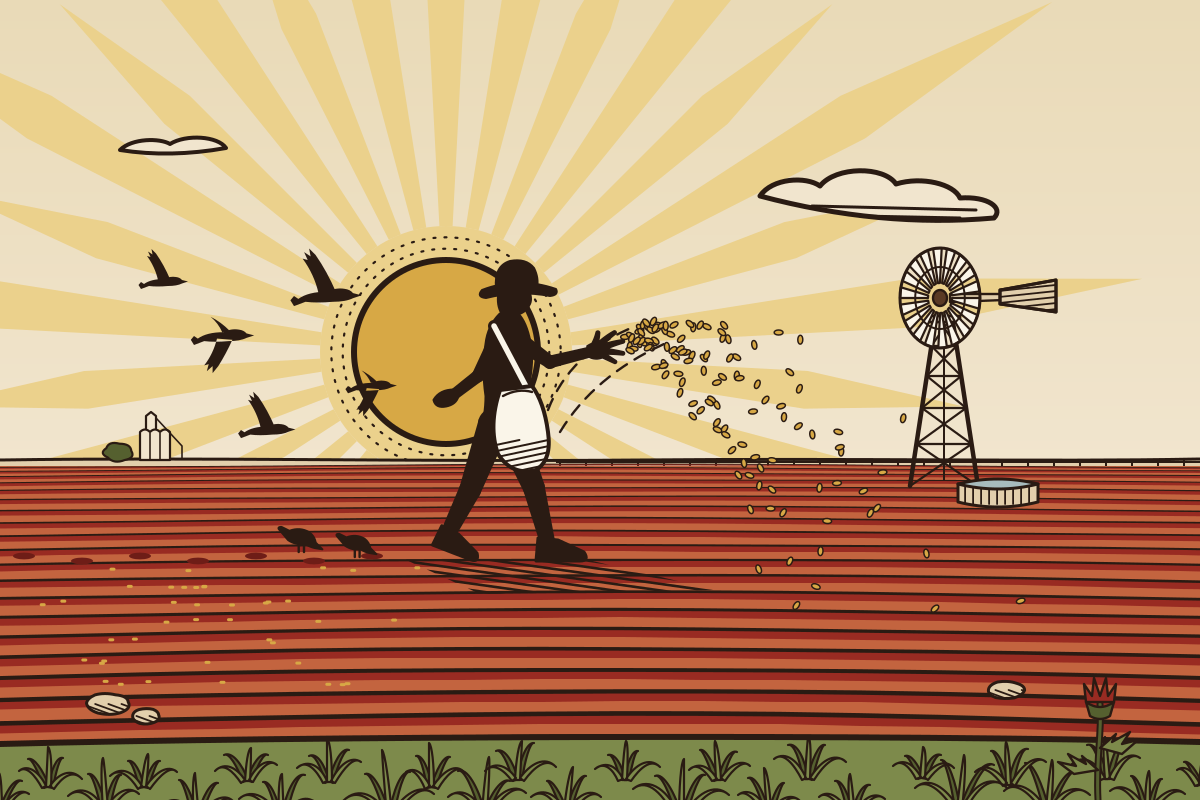
To Sow
Sow with Us
To Sow
Here at Home
To sow is to put something good in the ground and trust it to come up. Here in Harrow Creek, that mostly looks like groceries.
“For I was an hungred, and ye gave me meat.” — Matthew 25:35
Harrow Creek Food Pantry
Every Thursday, 4–6 pm, in the fellowship hall. We run it together with First Baptist Church and St. Joseph’s Catholic Church: three congregations, one pantry, one town.
If your family needs food, come on a Thursday. Park in the lot behind the fellowship hall on Pecan Street.
Weekend Backpacks
Every Friday during the school year, about 30 children at Harrow Creek Elementary go home with food for the weekend. It is done quietly. Nobody on the playground needs to know whose backpack is heavier.
Meals on Wheels
Church members drive the Tuesday route: a hot meal, a knock on the door and a few minutes of company. For some people on the route, that knock is the day’s only visit.
The Parsonage Garden
Our focus for 2026–27: raised beds on the lot where the old parsonage stood, open to anyone in town, with a share of every harvest going to the pantry. Read about the garden.
Lending a hand
To help with any of these, call the church office at (254) 555-0316, Tuesday through Thursday, 9 am to 1 pm, or email office@goodsoilumc.org. You don’t need to be a member to help, and you don’t need to be a member to be helped.
To Sow
The Parsonage Garden
For 2026–27, Good Soil is putting its back into one thing: a community garden on the lot where the old parsonage stood.
The lot
The parsonage came down in 2019, and since then the lot has grown mostly goatheads. Now it is becoming raised beds that anyone in Harrow Creek can sign up for. Raised, because out here the wind will carry loose topsoil halfway to Oklahoma if you let it.
Who can have a bed
Anyone in town. You don’t need to be a member, a Methodist or a churchgoer of any kind. Grow tomatoes, okra, peppers, black-eyed peas, whatever can stand the heat.
A share for the pantry
A share of every harvest goes to the Harrow Creek Food Pantry, so some of what comes up here ends up on a neighbor’s table.
How to sign up
Call or email the church office: (254) 555-0316 or office@goodsoilumc.org. The office is open Tuesday through Thursday, 9 am to 1 pm; email reaches it any hour. Questions about bed size, water and the like go to the same place.
Planting Day
Saturday, April 17, 2027, 8 am to noon. Bring gloves. You don’t need a bed of your own to come and dig. As the day gets close, it will be on the events page.
Why a garden
In 1968 this church took its name from the parable of the sower:
“And other fell on good ground, and did yield fruit that sprang up and increased.” — Mark 4:8
We have been talking about good ground for nearly sixty years. It seemed time to put some seed in it. Here is how Good Soil got its name.
To Sow
Around the World
Good Soil is one small church in one small town. It is also part of The United Methodist Church, and Methodists have a plain word for how that works: the connection. What no church could do alone, thousands of churches do together.
“In the morning sow thy seed, and in the evening withhold not thine hand.” — Ecclesiastes 11:6
UMCOR Buckets & Kits
Twice a year we assemble cleaning buckets and hygiene kits for UMCOR, the United Methodist Committee on Relief, which gets them to people digging out after floods and storms.
Rise Against Hunger
Each March we spend a morning in the fellowship hall packing meals of rice, soy, dried vegetables and vitamins for hungry people around the world. The goal is 10,000 meals. The next one is Saturday, March 6, 2027, 9 am to noon, ages 5 and up.
Souper Bowl of Caring
On Super Bowl Sunday, bring a can of soup to worship. A soup pot goes down the pews for anyone who would rather give cash. Groups all over the country do the same that day. Every can and every dollar from ours goes to the Harrow Creek Food Pantry.
Heifer International
Every Christmas the children raise money for a heifer through the Living Gift Market. A family somewhere gets a cow, and passes her first heifer calf on to another family.
Volunteers in Mission
Each June the youth go on a mission trip through United Methodist Volunteers in Mission (UMVIM) with Marcus Webb, our youth director. Ask them about it afterward. They will want to tell you.
Apportionments
Every United Methodist church sends a share of its money to the wider church. Our annual conference sets the share, and the word for it is apportionments. It is a real line in a small church’s budget, and it would be easy to keep that money at home. Good Soil pays its full share anyway, because that is how a small church in Harrow Creek helps run a seminary, a hospital, and a disaster response it will never see.

Coming Up at Good Soil
- Trunk or Treat & Chili Cook‑Off
- All Saints Sunday
- Community Thanksgiving Service
- Hanging of the Greens
- Living Gift Market
- Christmas Eve Candlelight Service
- Covenant Renewal Service
- Ash Wednesday
- Souper Bowl of Caring
- Rise Against Hunger Meal Packing
- Holy Week & Easter
- Parsonage Garden Planting Day
- Pentecost Sunday — Wear Red
- Graduate Sunday
- Vacation Bible School
- Homemade Ice Cream Social
- Blessing of the Backpacks
- Homecoming Sunday & Dinner on the Grounds
- Blessing of the Animals
Nothing on the calendar just now. Check back soon.
Trunk or Treat & Chili Cook‑Off: a picture. The words follow.

Trunk or Treat & Chili Cook‑Off
Saturday, October 31, 2026
5:30 – 7:30 pm
The church parking lot on Pecan Street
Children in costume go trick-or-treating from one decorated car trunk to the next while the grown-ups eat chili and argue about it. Marcus Webb, our youth director, enters the cook-off every year and loses every year. To enter a pot of your own, call the office at (254) 555-0316.
All Saints Sunday: a picture. The words follow.

All Saints Sunday
Sunday, November 1, 2026
10:45 am worship
In the sanctuary
We read aloud the names of our members and friends who died this past year, and the bell tolls once for each. It is the first Sunday of the month, so there is Communion too, and the table is open to everyone. Come and remember whoever you are missing.
Community Thanksgiving Service: a picture. The words follow.

Community Thanksgiving Service
Sunday, November 22, 2026
6:00 pm
Here at Good Soil this year
123 Main Street
Harrow Creek’s churches give thanks together, in one service, on the Sunday before Thanksgiving. Everyone is welcome, church home or not. Stay afterward for pie; there will be more than one kind.
Hanging of the Greens: a picture. The words follow.

Hanging of the Greens
Sunday, November 29, 2026
5:00 pm
Soup supper afterward
On the first Sunday of Advent we dress the sanctuary in green, hanging the wreaths and garland and trimming the tree, with a reading and a hymn as each goes up. Bring the children; they are good at the low branches.
Living Gift Market: a picture. The words follow.

Living Gift Market
Sunday, December 6, 2026
After 10:45 am worship
In the fellowship hall
Give a gift from the Heifer International catalog in the name of someone on your Christmas list: chicks, a goat, or a share of the heifer our children are saving for. Then cross the room to the United Women in Faith Christmas bazaar for pralines, pepper jelly and quilted table runners.
Christmas Eve Candlelight Service: a picture. The words follow.

Christmas Eve Candlelight Service
Thursday, December 24, 2026
6:00 pm, for families
11:00 pm, with Communion
The six o’clock service is made for families, wiggles and all. The eleven o’clock is quieter and includes Communion, and the table is open to everyone. Both end the old way: the lights go down, candles are lit hand to hand, and we sing “Silent Night.”
Covenant Renewal Service: a picture. The words follow.

Covenant Renewal Service
Sunday, January 3, 2027
10:45 am worship
Communion follows
John Wesley’s service for a new year. We pray the Covenant Prayer together — “I am no longer my own, but thine” — and share Communion. A quiet, serious, hopeful way to begin 2027.
Ash Wednesday: a picture. The words follow.

Ash Wednesday
Wednesday, February 10, 2027
6:00 pm supper in the fellowship hall
7:00 pm service with the imposition of ashes
Lent begins with the usual Wednesday supper: $5 a plate, kids eat free, nobody turned away. At seven, anyone who wishes may receive a cross of ashes on the forehead, with the old words: “dust thou art, and unto dust shalt thou return” (Genesis 3:19).
Souper Bowl of Caring: a picture. The words follow.

Souper Bowl of Caring
Sunday, February 14, 2027
10:45 am worship
Bring a can of soup
On Super Bowl Sunday, bring a can of soup to worship and put something in the soup pot when it comes down your pew. All of it goes to the Harrow Creek Food Pantry. Yes, it is also Valentine’s Day; nothing says love like chicken noodle.
Rise Against Hunger Meal Packing: a picture. The words follow.

Rise Against Hunger Meal Packing
Saturday, March 6, 2027
9:00 am – noon
In the fellowship hall
Ages 5 and up
We scoop rice, soy, dried vegetables and a vitamin packet into bags, seal and box them, and Rise Against Hunger ships them to hungry people around the world. The goal is 10,000 meals by noon. Wear comfortable shoes; you will be on your feet.
Holy Week & Easter: a picture. The words follow.

Holy Week & Easter
March 25 – 28, 2027
Maundy Thursday, 7:00 pm
Good Friday, noon
Easter sunrise, 7:00 am, by the creek
Easter worship, 10:45 am
Thursday evening remembers the Last Supper. Friday at noon keeps watch at the cross. Easter starts outdoors by the creek before sunup — meet in the lot behind the fellowship hall at 6:45 and we’ll walk down together, and dress warm — then comes inside for the lilies and every verse of “Christ the Lord Is Risen Today.”
Parsonage Garden Planting Day: a picture. The words follow.

Parsonage Garden Planting Day
Saturday, April 17, 2027
8:00 am – noon
The Parsonage Garden
Tomatoes, peppers and squash go into the raised beds where the old parsonage stood. No experience needed. Bring gloves, unless you like red dirt under your nails till Wednesday. Anyone in town can sign up for a bed, and a share of every harvest goes to the food pantry.
Pentecost Sunday — Wear Red: a picture. The words follow.
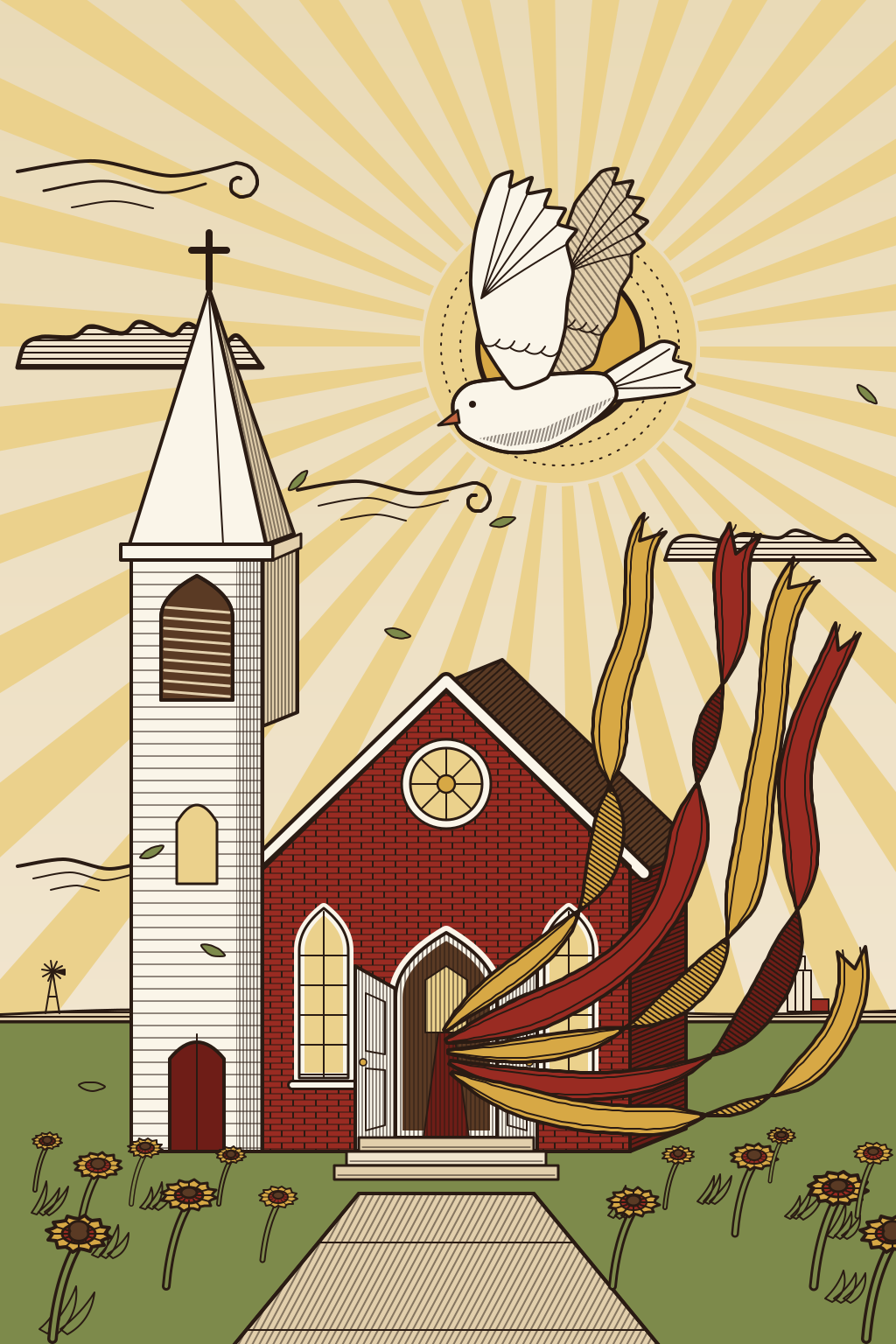
Pentecost Sunday — Wear Red
Sunday, May 16, 2027
10:45 am
Worship in the sanctuary
On the fiftieth day of Easter, the church remembers the Holy Spirit arriving with a sound “as of a rushing mighty wind” (Acts 2:2). Around here we know a little something about wind. Wear red — a shirt, a tie, a bandana. Plowboy maroon will pass.
Graduate Sunday: a picture. The words follow.

Graduate Sunday
Sunday, May 23, 2027
10:45 am
Worship in the sanctuary
Lunch after
We bless this year’s graduating seniors and send each one off with a handmade quilt, a full plate and more advice than anybody asked for. If there’s a senior in your house, tell the office at (254) 555-0316 so nobody gets missed.
Vacation Bible School: a picture. The words follow.

Vacation Bible School
Monday – Friday, June 14 – 18, 2027
9:00 am – noon each day
Ages 4 through 5th grade
Five mornings of Bible stories, singing, crafts, snacks and games on the lawn. Every child in Harrow Creek is welcome, church family or not. Send them in clothes that can get dirty, and call the office at (254) 555-0316 with any questions.
Homemade Ice Cream Social: a picture. The words follow.
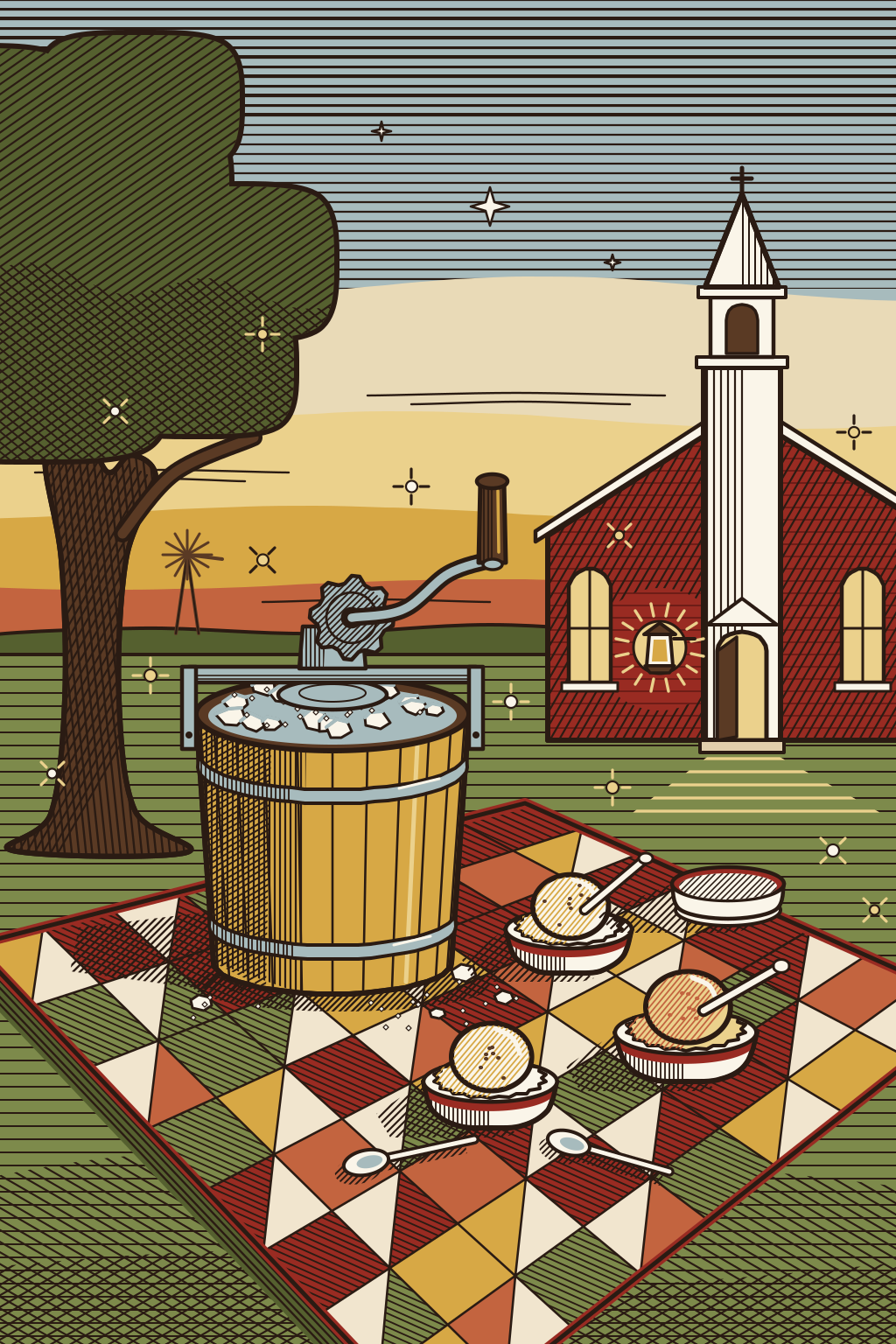
Homemade Ice Cream Social
Sunday, July 11, 2027
6:30 pm
On the church lawn
Homemade ice cream, churned right there on the lawn as the evening cools from scorching to merely hot. Peach, vanilla, and at least one flavor nobody can name. Bring a lawn chair, and a freezer of your own if there’s a family recipe worth showing off.
Blessing of the Backpacks: a picture. The words follow.

Blessing of the Backpacks
Sunday, August 15, 2027
10:45 am
Worship in the sanctuary
Bring your backpack to church — or your lunch box, your lesson plans, your bus keys. Students, teachers, coaches, cafeteria crews and bus drivers come forward, and the whole church prays over the school year ahead, kindergarten through college.
Homecoming Sunday & Dinner on the Grounds: a picture. The words follow.
Homecoming Sunday & Dinner on the Grounds
Sunday, September 12, 2027
10:45 am, worship in the sanctuary
Noon, dinner on the lawn
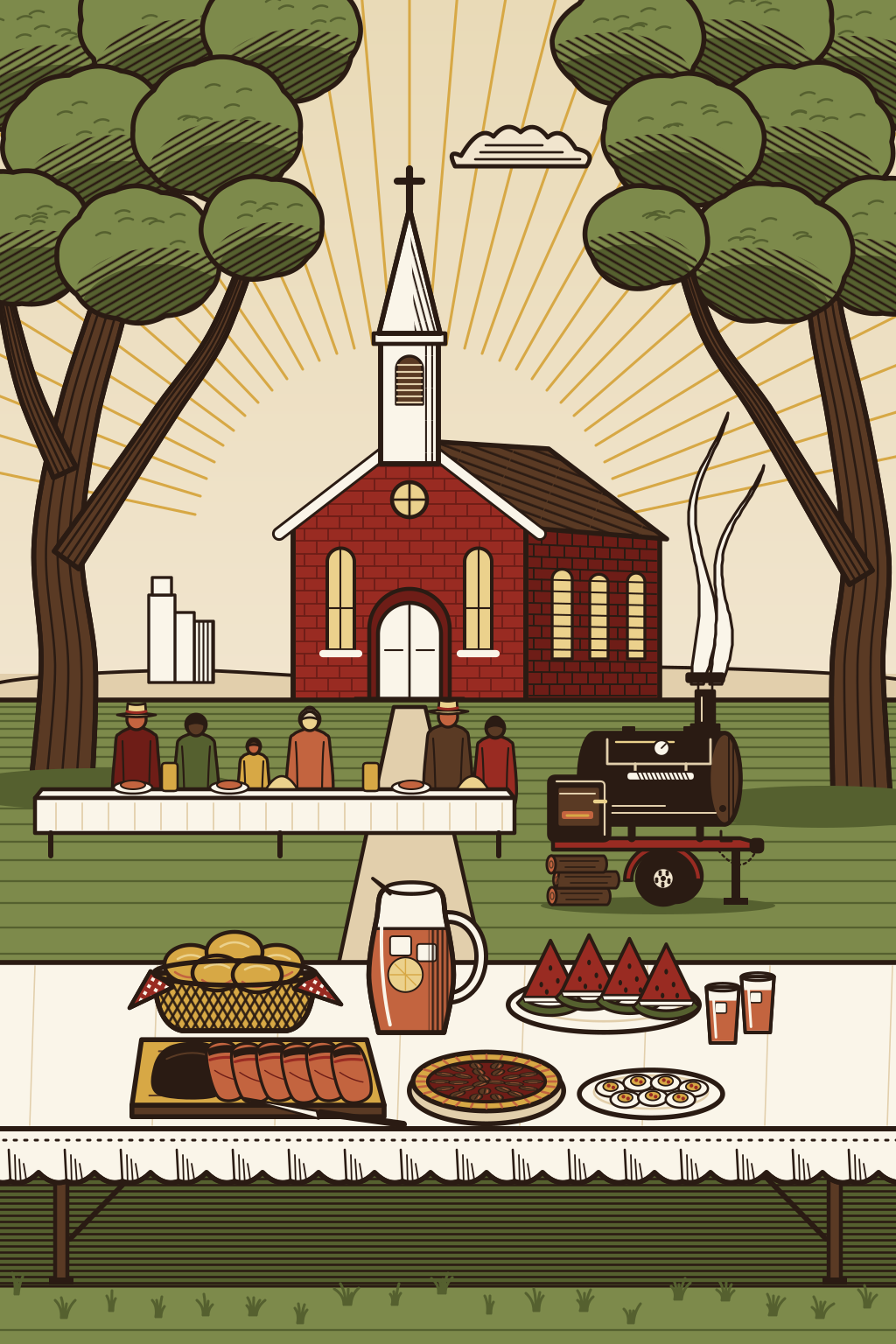
The church turns 119 this year. Eleven farm families started it in the back office of the cotton gin, and some of their great-great-grandchildren will be in the brisket line. The United Methodist Men smoke the brisket; you bring a side or a dessert, and anybody who used to sit in these pews.
Blessing of the Animals: a picture. The words follow.

Blessing of the Animals
Sunday, October 3, 2027
4:00 pm
On the church lawn
Bring the dog, the barn cat, the show goat or the hamster to be blessed by name, the day before the feast of St. Francis. Leashes and carriers, please. Wesley, the pastor’s blue heeler, will be supervising.

From the Pastor
Seed Thoughts
The Sower Didn’t Check the Soil First: a picture. The words follow.
Seed Thoughts
The Sower Didn’t Check the Soil First
Every fall Dale plants wheat, and I have learned not to talk to him while he does it. Before a single seed goes in, he has walked the ground with a soil probe to see how deep the moisture goes. The drill is set to lay each seed about an inch and a half down, in rows straight enough to embarrass a ruler, at a rate he worked out at the kitchen table with a pencil and the seed bill. Seed costs money. If Dale can help it, not one kernel lands where it won’t grow.
I think of him whenever I read the parable of the sower.
“Behold, there went out a sower to sow.” — Mark 4:3
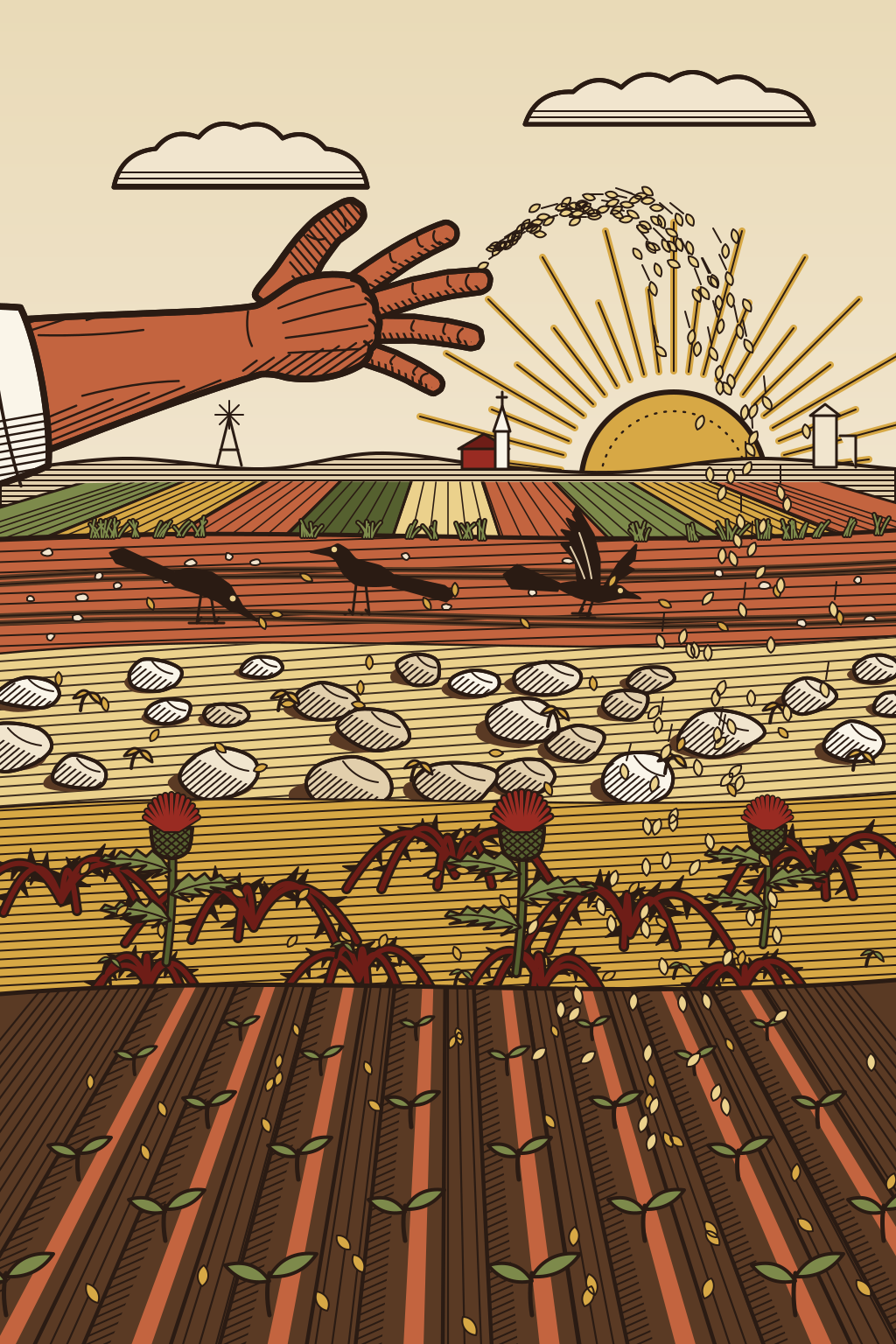
And then the man in Jesus’ story does everything Dale won’t. He flings seed onto the path, where it lies on packed dirt until the birds come for it. He throws it on rocky ground, where it comes up fast and dies the first hot afternoon. He throws it into the thorns. Some of it, eventually, lands on good ground. A hired hand who sowed like that west of town would not be a hired hand by Friday.
The farmers in that crowd would have caught it. I suspect a few of them laughed out loud.
We usually preach this parable as a test. Which soil are you? Hard like the path, shallow like the rocks, choked like the thorns? Jesus does explain it along those lines a few verses later, and it is an honest question to sit with. But I have watched people walk out of church afraid they are rocky ground, and I don’t believe that is where the story starts. It starts with a sower who doesn’t check the soil first.
Methodists have a name for this: prevenient grace, an old word for the grace that goes ahead of us. Before you ever said a prayer, before you knew enough to want to, God was already at work in you, throwing seed. Not because you had proved yourself good ground. Nobody had looked. That is not how this sower operates.
It is one reason Methodists baptize babies. I was baptized at about four months old, and I’m told I slept through the whole thing. I had done nothing. I could not have told you my own name. The water was not a reward for anything. It was seed thrown on ground that had shown no sign yet of being good, because God does not wait to find out what kind of ground you will turn out to be.
Here is the other thing about the path, the rocks and the thorns. They are not three kinds of people. They are most of us in a single week. I have been the path, so packed down with my own opinions that nothing could get in. I have been the rocky ground, all fire on Sunday and dried out by Wednesday. And I know the thorns well; they look a great deal like my calendar. Ground changes. Hard dirt gets broken up. Rocks get carried off one at a time. A field that grew nothing but goatheads for years can grow wheat.
So I try not to check the soil either. When someone slips into the back pew at 10:45, I have no idea what kind of ground they are, and most days neither do they. Every June, Vacation Bible School takes any child in Harrow Creek who walks through the door, and nobody asks which of them will grow up to be Methodists.
When Dale fills the drill at the edge of a field, a little seed always spills onto the turnrow. That is the hardest ground on the place, packed flat by every truck and tractor that has crossed it since spring. No farmer in his right mind would plant there. The birds get most of it, just as Jesus said they would. Not all of it. Come November there is a thin green stripe along the turnrow anyway.
Dale calls it waste, and by every standard a good farmer has, he is right. I have stopped arguing the point. I just slow down when I drive past it.
What the Drought Taught Us: a picture. The words follow.

Seed Thoughts
What the Drought Taught Us
I had been in Harrow Creek about a week when somebody first told me how this church got its name. By the end of that month I had heard it four more times, from four different people, and every one of them told it the same way. Small towns do not always agree on much. They agree on this.
It starts with the drought. From 1950 to 1957 the rain mostly did not come to the rolling plains. It is still the drought of record in Texas, the one the state plans its water around. The wind lifted the topsoil off the fields and set it down again on windowsills, in the hymnals, in the folds of Sunday clothes. Families who had farmed here since before the First World War packed up and left. Attendance at this church fell by half.
The church held on. That is how the older members put it, and I have come to think it is exactly the right phrase. Nobody claims anything heroic. They finished this red-brick sanctuary in 1952, two years into the drought, which some will tell you was great faith and others will tell you was a contract already signed. I suspect it was both. And they started cooking supper on Wednesday nights, “because nobody should eat alone when the crop fails.” We are still cooking it.
Waiting, the way they did it, was not sitting still. They kept the doors open. They sang the hymns to a half-empty room. They set the tables on Wednesdays whether the pots were full or not. They prayed for rain every Sunday for seven years, which is its own kind of stubborn. That is what waiting looks like when it is a practice and not just a mood.
In 1957 the rain came back, nearly all at once, the way it does out here. The fields came back over the next few years, and some of the families did too.
Then in 1968 the Methodist Church and the Evangelical United Brethren joined to become The United Methodist Church, and congregations all over the country were changing their signs anyway. This one took the chance to choose a new name. There was a meeting. And an old farmer named Wendell Pruitt, who had worked his land straight through the drought, stood up with his Bible and read one verse from Mark.
“And other fell on good ground, and did yield fruit that sprang up and increased…” — Mark 4:8
Then he said what the drought had taught them: the ground was good all along. It just needed rain and patience. The vote was unanimous, which Teresa Fuentes in our office assures me has not happened at a church meeting since. Her grandparents were in the room.
I have turned Wendell’s sentence over more than almost anything I learned at Duke. He did not say the drought was a punishment, or a test they had passed, or a blessing in disguise. He did not try to explain it at all. He said it had taught them something about the ground. Seven years of blowing dirt had looked like a verdict on this land, and it was not one. The land was not bad. It was waiting, the same as they were.
I sit with people in their own dry years: a long illness, a grief that will not lift, a prayer that has gone unanswered longer than they can stand. I have learned not to promise them rain by Tuesday. I don’t know when it will rain. Neither did Wendell. What I can tell them is what this church found out the slow way. A dry spell, even a long one, is not the last word on the ground.
They could have named the church for the rain. It would have made sense; the rain is what ended it. They named it for the ground instead.
The Year the Field Rests: a picture. The words follow.
Seed Thoughts
The Year the Field Rests
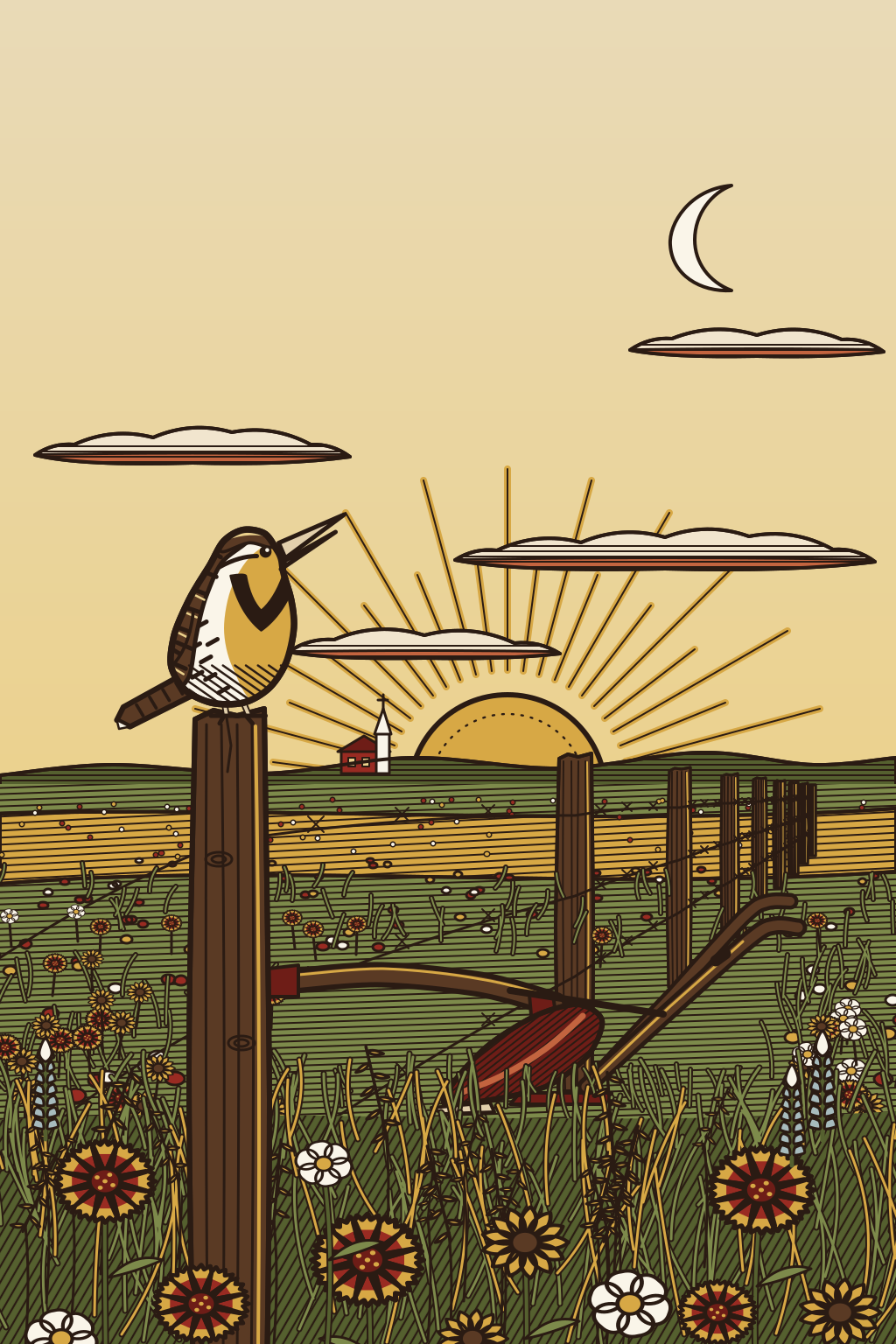
This year Dale is leaving the north quarter fallow. He cut the wheat off it in June, and he will not plant it again until next fall. That is a hundred and sixty acres doing, as far as anyone driving past can tell, nothing at all.
People notice. Harrow Creek knows whose field is whose, and a quarter section sitting idle gets talked about. Twice now someone has caught me at the co-op to ask, very kindly, whether Dale is feeling all right.
He is fine. What he is doing is old dryland sense. The rain we get out here is rarely the rain we need, so a farmer will sometimes let a field sit a season. He keeps the weeds off it, leaves the stubble standing to catch what snow comes and to hold the dirt down when the wind blows, and lets the ground bank every drop that falls. Dale says the north quarter is saving up. By next fall it should have moisture down deep where the roots can find it, and it will likely make the best wheat he grows that year.
Dale did not come up with this on his own.
“But in the seventh year shall be a sabbath of rest unto the land, a sabbath for the LORD: thou shalt neither sow thy field, nor prune thy vineyard.” — Leviticus 25:4
Leviticus 25 is not a farming tip. It is a command, and it must have sounded like a frightening one. Skip a whole year of planting? And eat what? Somebody asked exactly that. It is right there in verse 20: “What shall we eat the seventh year?” I am glad they said it out loud, because it is the first thing I would have asked. God answers with a promise. The sixth year will be blessed enough to bring forth fruit for three. The land rests, and the people are carried.
I wish I took that promise as well as the north quarter does. I don’t. Pastors are famously bad at rest, and I am no exception. There is a day off on my calendar every week, and most weeks I treat it as a suggestion.
We have a blue heeler named Wesley, for John and not the town, and he has never once rested on purpose. He herds the barn cats. He herds Caleb out to the truck every morning, ready or not. He seems to take the north quarter as a personal insult. When he finally sleeps, it is because he has fallen over where he stood. Some evenings I look at him and recognize the type.
Here is what the fallow field keeps teaching me. Resting is not the same as being neglected. Dale still goes out there. He keeps the weeds down and checks the ground after a rain. The field is looked after; it just is not asked to produce anything. That is the best picture of Sabbath I know: a stretch of time when you are still cared for, and nobody needs anything from you. The work does not get finished first. It never does. You rest anyway, because God rested, and then told us to.
My own best version of it turns out to be a Sunday afternoon with the Rangers on the radio and a scorecard on my knee. I keep score in pencil, every pitch. It is the most restful thing I know, because nothing that happens in the eighth inning is my responsibility. I have noticed that in the weeks I do that, the sermon the next Sunday is better. I did not expect that. Dale was not surprised.
From our back porch you can see the north quarter. This time of year the stubble has gone pale and the ground looks empty, and I have caught myself feeling sorry for it. I shouldn’t. It is the only field on the place doing exactly what it was told.
Five Dollars, Kids Eat Free: a picture. The words follow.

Seed Thoughts
Five Dollars, Kids Eat Free
The best theology in our bulletin isn’t in the order of worship. It’s down at the bottom with the announcements: Wednesday Night Supper, six o’clock in the fellowship hall. Five dollars a plate, kids eat free, nobody is turned away.
Three clauses, and whoever first wrote them knew exactly what they were doing. I’d like to take them one at a time.
Five dollars is a real price. It isn’t free, and that’s on purpose. Most people in Harrow Creek would rather pay their own way, and a price lets them. The man who has been on a tractor since daylight can put down his five dollars and eat his chicken spaghetti as a customer, not a project. The retired teacher whose house has gotten too quiet on Wednesdays can tell herself she came for the sheet cake. A price is a kind of courtesy. It says you are a guest here, not a case.
Kids eat free because a family with four children should not have to do arithmetic in the doorway. I have watched young parents come in from work, still in scrubs from the county hospital or with red dirt on their jeans, and seen their shoulders drop when they remember the math stops at two plates. I have a sixteen-year-old tuba player at home. I know what one growing boy can do to a pan of King Ranch casserole, and I would rather not price out three of him. A child at our long table is not a line item. She is the reason the table is long.
And then there is the last clause, the one that makes it church. Nobody is turned away. Not the stranger who saw the cars in the lot and took a chance. Not the family who came for a month, stopped coming, and has now come back. Not the young man between jobs who sits by himself the first Wednesday and doesn’t by the third. I am not going to tell you who leans on that clause. Often I don’t know myself, and that is the point. It was written so nobody would have to say it out loud.
I have come to believe the first clause is there so the last one can stay quiet. If supper were free, the folks who can pay would feel like charity cases, and some would stop coming. If it were five dollars and nothing more, we would be a restaurant with folding chairs. Put the two together and nobody at the table can tell who paid and who didn’t. That isn’t an accident. That is grace with good manners.
The prophet Isaiah got there first. At the start of chapter 55 he calls out like a man selling melons off a tailgate, and then says something no seller ever has:
Ho, every one that thirsteth, come ye to the waters, and he that hath no money; come ye, buy, and eat; yea, come, buy wine and milk without money and without price.
Buy, without money. Any farmer in Harrow Creek would have a few words about milk without price. But that is how God likes to talk: in the language of the market, turned inside out. You come to buy. You find out it has already been paid for.
We say the same thing on the first Sunday of every month, only in a different room. When we gather at the Lord’s Table, nobody asks to see a membership card. You don’t have to be a Methodist, or from Harrow Creek, or sure of very much. The invitation belongs to Christ, not to me, and he has never asked me to check anyone at the door. The table is open to everyone. You hold out your hands, which is the only way anybody has ever received bread.
It is no coincidence that the church that opens that table on Sunday sets up folding tables on Wednesday and keeps the same rule at both. Each table teaches the other. Supper teaches me about Communion: that a crowded table is a better one, and that the children are not an interruption of the meal but part of it. Communion keeps supper honest. It reminds me that none of us earned our place at either table, including the ones who paid.
At a quarter to seven the hall starts to empty. The youth head off with Marcus, the Cherub Choir goes to find Miss Bea, and the grown-ups come with me and their Bibles. Somebody is always still at the end of the long table, finishing a second piece of pie. Whoever they are, they’re welcome to it. The bulletin says so.
A Mustard Seed and a Grain Elevator: a picture. The words follow.

Seed Thoughts
A Mustard Seed and a Grain Elevator
You can see the elevator from the highway long before you can see the town. Before the stoplight, before the Dairy Queen, before anything else, there it stands: the only thing for miles that got tall on purpose.
Folks here give directions by it. They come home by it. People who grew up in Harrow Creek and moved off tell me they don’t feel they’re home until it comes up over the horizon. Ask a stranger to draw this town and they will draw the elevator first and fill in the rest.
Matthew 13:31–32 has been different for me ever since I came to live in sight of it. Jesus says the kingdom of heaven is like a grain of mustard seed that a man took and sowed in his field:
Which indeed is the least of all seeds: but when it is grown, it is the greatest among herbs, and becometh a tree, so that the birds of the air come and lodge in the branches thereof.
Botanists will tell you the mustard seed isn’t really the smallest seed there is. Jesus was talking to farmers, not botanists, and every farmer listening knew exactly what he meant.
Most of us hear it as a story about getting big. Small seed, big tree; small church, someday big church. I have sat through enough district meetings to know how much we love that reading. And I confess that when I see the elevator from the highway, I think of it as the big thing. It is the biggest thing we have.
Dale set me straight one June. I rode along when he hauled wheat to town, and while we sat in the line of trucks waiting our turn at the scale, he told me there are something like a million kernels in a single bushel. Then he pointed up at the elevator and let me do the arithmetic. I gave up somewhere in the billions.
Sitting in that truck, I learned there is nothing big inside the elevator. Not one thing. It is tall and heavy and you can see it from the highway, but everything it holds is something you could lose in the crease of your palm. Wheat from the farms west of town, milo from the farms east of it, every kernel grown from a seed somebody put in the ground, prayed over, and waited on. The elevator isn’t a big thing at all. It is a great many small things that ended up in the same place.
I think that is closer to what Jesus was after. He didn’t say the kingdom is like a tree. He said it is like a seed. All through Matthew 13 he keeps reaching for things you could hold between two fingers: a seed, a bit of leaven, a single pearl. The kingdom arrives at the size of something you could drop in the dirt and never find again. That is the scale God likes to work at. The big thing comes later, and it isn’t ours to build.
Good Soil is a small church. On a typical Sunday there are about eighty-five of us. Most of what we do would never show from the highway: about thirty backpacks of weekend food that go home quietly from the elementary school on Fridays, a Meals on Wheels route on Tuesdays, an empty lot where the old parsonage stood that we mean to turn into a garden. Every year we also pay our full apportionments to the wider church, which sounds like a budget line until you remember what it pays for, a long way from here. That is a truckload at the elevator too, poured in with everyone else’s, and nobody can tell whose grain was whose.
And then there are the birds. Jesus doesn’t end the parable with how tall the tree got. He ends it with who moved in. Anybody who has stood near a grain elevator knows the birds got that message a long time ago: pigeons on every ledge, sparrows working the spilled grain around the pit. Dale says the elevator would be glad to be rid of them. Jesus seems less particular.
If the mustard seed is about getting big, it is about a particular kind of big, the kind with room in it. The tree in the parable is great because something tired can land there. Nobody asks the birds whose field it is.
I still look for the elevator every time I come home. I know what it’s made of now.
Stay in Love with God: a picture. The words follow.

Seed Thoughts
Stay in Love with God
My grandmother kept a prayer list on her refrigerator. It started as one sheet of notebook paper held up by a magnet shaped like a Holstein, and by the time I was in high school it had spread to four sheets and most of the freezer door. You had to lift a corner of it to find the handle.
Names went down the left side in pencil. Nobody ever came off. If someone got well, she kept praying for them, on the grounds that they would probably get sick again. If someone died, she left the name where it was and prayed for whoever missed them. Every morning before breakfast she stood at the counter with her coffee and went down it, name by name. Her coffee was usually cold by the time she reached the bottom.
She didn’t look like someone having a religious experience. She looked like someone checking fence.
John Wesley gave the first Methodists three general rules. The first two get most of the attention: do no harm, and do good. The third, in his eighteenth-century English, was “attending upon all the ordinances of God”: public worship, the Word read and preached, the Lord’s Supper, family and private prayer, searching the Scriptures, and fasting. Not so long ago a Methodist bishop put it more plainly, and that is the phrase we use around here: stay in love with God.
I love that phrase. I also think it is easy to misread. We hear “in love” and think of a feeling, the kind that comes over you at seventeen in the bleachers on a Friday night. Feelings come and go. If staying in love with God depends on feeling it, most of us are in trouble by midweek.
But look again at Wesley’s list. Every item on it is something you do with your body, on a particular day, whether you feel like it or not. Wesley called them means of grace, which is a churchy way of saying they are the places God has promised to show up. He wasn’t telling Methodists to feel more. He was telling them where to stand.
The short letter of Jude, tucked in just before Revelation, puts it in seven words at verse 21:
Keep yourselves in the love of God.
Notice what Jude doesn’t say. He doesn’t say to keep loving God harder. He says to keep yourselves in God’s love, as if it were a place. It is like the shade of the one tree in a pasture in August. You didn’t make the shade, and you can’t make more of it by wanting to. You just don’t wander out of it.
I grew up on a dairy outside Muleshoe, which is the best school for this I know. Cows have to be milked morning and evening, every day of the year: Christmas, your birthday, the morning after a funeral. A dairy cow has no interest in how you feel. My father loved that place with his whole heart, and I promise you he did not feel it at half past four on a January morning with the wind out of the north. He went out to the barn anyway. Some mornings, by the time the sun came up, the feeling had come out to meet him.
I doubt my grandmother felt something every time she went down that list. Some mornings, I suspect, she felt mostly the coffee. But she kept at it for more than fifty years, and it did something to her face I can only describe by saying she looked like a woman who had never wandered far from the shade.
We keep a few refrigerator doors at Good Soil. The Covenant Discipleship groups are one: four to six people who meet every week and ask each other plainly how they are keeping all three rules. Teresa’s prayer chain is another. Sunday morning is the biggest. None of them waits on anybody feeling inspired.
When my grandmother died, my mother took the list down, every sheet, and folded it into the family Bible. My name is on the first page, near the top, in pencil gone soft and gray.
I keep my own list now. It is on our refrigerator, held up by a magnet from the co-op gin. Dale is on it, and Caleb, and Hannah in Fort Worth, and a good many of you. Some mornings I feel something when I go down it. Most mornings I feel the coffee. I go down it anyway, name by name, and nobody has come off yet.
Self-Service Help
Help
Hello! I’m here to provide you with quick answers to common questions, 24/7.
I’m not an AI. I’m a short list of answers the church wrote, matched to the words in your question. I know our service times, our staff, and how to reach us — and not much else. If I can’t help, I’ll point you to a person.
Help
Ask a question
The assistant needs JavaScript to answer. You can always email us.
Contact Us
- Emailoffice@goodsoilumc.org
- Phone(254) 555-0316
- Address123 Main Street
Anywhere, XX 99999 - OfficeTuesday – Thursday, 9 am – 1 pm
- ParkingBehind the fellowship hall on Pecan Street; the side door there has no steps.
Contact
Giving
Giving at Good Soil is old-fashioned: there are two ways to do it, and neither of them goes through this website.
On Sunday
The offering plate comes down the pews during the 10:45 worship service. Cash or a check is fine; make checks out to Good Soil United Methodist Church. If you’re visiting, let the plate go by. We’re glad you came.
By mail
Mail a check to Good Soil UMC, 123 Main Street, Anywhere, XX 99999.
Where it goes
Most of it stays in Harrow Creek: the light bill and the pastor’s salary, the Wednesday supper table, the food pantry and the weekend backpacks, and this year the Parsonage Garden.
A share goes to the wider United Methodist Church. Those gifts are called apportionments, and Good Soil pays its full share. It’s how a small church in Harrow Creek helps run a seminary, a hospital, and a disaster response it will never see.
“Every man according as he purposeth in his heart, so let him give.” — 2 Corinthians 9:7
That is as close as anyone here will come to naming an amount.
Contact
Prayer Requests
You don’t have to be a member, and you don’t need the right words. A name and a sentence is plenty.
Two ways to ask
- Email the church office at office@goodsoilumc.org, with “Prayer request” in the subject line.
- Call (254) 555-0316, Tuesday through Thursday, 9 am to 1 pm.
The prayer chain
Teresa Fuentes in the church office keeps the prayer chain: church members who have promised to pray for whatever comes to them. When a request is cleared to go out, she passes it along by phone and email. If you’d like to be one of the people who pray, tell her.
Who will know
You decide. Tell us whether a request can go to the prayer chain or should stay with the pastor alone. Mark it “just the pastor” and it goes to the Rev. Ruth Calloway and stops there. Teresa opens the office email, and she will hand it on without a word to anyone. If you don’t say, we’ll ask before it goes any further.
“Bear ye one another’s burdens, and so fulfil the law of Christ.” — Galatians 6:2
Privacy Policy
Updated October 12, 2026
This is what happens to your information when you visit goodsoilumc.org. The short version: almost nothing, and nothing that says who you are.
What we don’t do
There are no accounts, no logins, no cookies, no tracking or analytics, and no ads on this site. We don’t take gifts online, so there is nowhere here to type a card number.
The Help page
The assistant on the Help page runs in your browser. When it answers your question, nothing is sent or saved. When it can’t, that question is saved on our web server with the date and a shortened form of your internet address — enough to show roughly where you are, not who you are — so we can see what people ask and write better answers. It also offers to open your own email with your question filled in, if you’d like a reply from a person.
What your browser keeps
If you switch to the plain view, your browser remembers that choice so the site opens the same way next time. It stays on your device until you switch back or clear your browser’s data for this site.
When an announcement card greets you on arrival, your browser also notes that you’ve seen it, so it doesn’t keep coming back while you look around. That note lasts only for the visit and is gone when you close the tab.
Other services this site uses
- Fonts. The site’s typefaces come from Google Fonts, so your browser asks Google for them. Like any website you visit, Google receives your IP address and browser type when it does.
- Our web host. Like nearly every website, our host keeps standard server logs — your IP address, the page you asked for, the time, and your browser type — for a short time, to keep the site running and secure. We don’t use them to identify anyone.
- Links to other sites. There are none. The email links open your own mail program; nothing else here sends you off this site.
When you email us
If you write to us, we use your message and address only to reply to you. A prayer request is shared only as far as you tell us it can be — with the prayer chain, or with the pastor alone.
Changes
If this ever changes, we’ll update this page and its date.
Contact Us
Questions about this policy:
- Email: office@goodsoilumc.org
- Address: Good Soil United Methodist Church, 123 Main Street, Anywhere, XX 99999
Our Mission
“To make disciples of Jesus Christ for the transformation of the world.”
Mark 4:8
“And other fell on good ground, and did yield fruit that sprang up and increased; and brought forth, some thirty, and some sixty, and some an hundred.”